Sustainable Materials: Why Measurement Matters
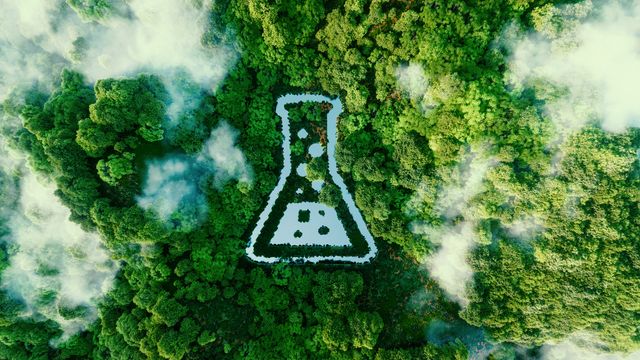
One of the most dynamic frontiers in the field of materials science is the development of new and improved sustainable materials that can support the advancement of a more circular economy.
At the Advanced Materials Show 2025, experts discussed some of the challenges that relate to enabling more sustainable materials and their circularity, paying particular attention to the role that measurement and metrology – the scientific study of measurement – can play in supporting the adoption and scaling of these materials.
To learn more about the field of sustainable materials research and the importance of measurement to its future, Technology Networks spoke with panel chair Dr. Yiwen Pei, a senior scientist at the National Physical Laboratory (NPL) and an expert in the field of chemical metrology.
Alexander Beadle (AB):

What does it mean for a material to be sustainable or circular?
Yiwen Pei, PhD (YP):

Among the general public, and sometimes even in research, these terms are often used interchangeably. But there is quite a distinct difference between the two terms.
Overall, sustainability is a broader term that can be applied to any approach or innovation that meets the demands of the market while also minimizing its impact on the environment compared to existing technologies. For example, recycling or moving away from the use of fossil fuels would be a sustainable change.
With the term “circularity”, we are being much more specific. This refers to an approach where you are trying to achieve a closed-loop or a circular chain in a specific industry. For example, in plastics, you can look to take waste materials and recycle them into new, useful products. This kind of circular approach helps to minimize waste.
How do sustainability and circularity relate to your research?
My background is as a trained chemist with a special focus on polymers. At NPL, I lead the chemical metrology and chemical analysis of polymeric platforms – ranging from pharmaceuticals to drug delivery systems. But I also have a strong focus on sustainability in this regard.
That boils down to two core aspects: how do I make manufacturing and formulation more sustainable, and how can I improve the packaging that these materials are wrapped in?
On the manufacturing side, one of the projects I’m working on is using a digital data platform combined with bespoke measurement methods to get key information about very valuable pharmaceuticals, such as precision medicine products or vaccines, and then feed this into a better platform that can predict the pharmacokinetics. This shortened the lifecycle needed for product development dramatically, from many years down to just one or two.
I also deal with primary and secondary pharmaceutical packaging; there are many relevant aspects there. Firstly, we must think about reuse and recycling. Currently, pharmaceutical packaging is a very strange area because it is exempt from a lot of government regulations on recycling due to the health and safety concerns of recycling these materials. But these exemptions will finish soon.
Pharmaceutical packaging
In pharmaceuticals, the term primary packaging refers to the packaging container that is in immediate contact with a drug. Examples of this may include vials, blister packs, ampoules or bottles that are designed to directly protect the drug from contamination, degradation and damage.
Secondary packaging is the outermost layer and includes the likes of cartons or boxes, which often provide some additional information about the drug in addition to another layer of protection.
Polystyrene is used a lot in secondary packaging for vaccine transport and so on, but these materials aren’t being recycled. I work with partners to investigate whether we can use natural products to make biodegradable, organic and recyclable materials to replace this.
Another aspect is that nearly 100% of waste clinical materials are incinerated, when only around 20% needs to be incinerated by law. We like to ask the question – why? It could be down to people’s behavior, or it may be down to the fact that a lot of products are simply not designed for recycling. Take injectable EpiPens, for example, they are not designed for easy recycling. It is not good enough to just throw these problems to the recyclers to figure out – we need to work with the entire supply chain to sort this out. We should design for recycling, but this effort is going to need everyone’s help.
What role do measurement and metrology play in supporting the scale-up of the sustainable and circular materials sector?
We can divide this down into thinking about physical measurements and data. On the physical measurements side, we are talking about the chemical, biological and physical measurements of a material.
Imagine that we have sustainable materials that are hugely picking up at the moment – measurement capabilities must be able to follow that. The regulatory side can swoop in fast and strong, but there may be no solutions that are capable of measuring what you want.
For example, a regulation comes up where if you have less than 70% recycled content in your packaging, then you must pay a fine. There is no solid way of measuring that – you can look at color changes, but you are making very risky assumptions there. There are a lot of research metrologists who are working in these areas to find bespoke, fit-for-measure methods that can support the regulatory side of sustainable materials.
There is also the issue of quality in recycled materials. Quality needs to be ensured in a certain way because recycling is a batch-to-batch process. Quite often, what you find is that when you use recycled plastics, after several cycles of reuse and recycling, you start to see some defects in the product. A big topic at the moment is to implement fit-for-purpose quality assurance tools, but metrologists are also interested in working with manufacturers to better understand the onset of these defects and uncover the mechanisms behind why they are happening, and ultimately, what we can do to prevent them.
Circling back to the data side of things, we also must think about data handling and processing.
Imagine you are doing recycling and there is a large quantity of plastics coming in with every batch. How are you going to mix it? How are you going to sample it? And how many times are you going to measure it before you get your data? This is crucial, yet there is still a lot of knowledge lacking in these areas, though there may be some industry practice out there. We are helping people establish this knowledge.
Also, once you have measured your 500 samples or so, you end up with a huge library of data. Do you have fit-for-purpose data software to process them? Is that software validated and do you trust it? Machine learning is sometimes used for this process, but do you trust your machine learning model? Machine learning doesn’t just solve these issues; you must be able to measure it too.
What types of challenges does the field of sustainable materials face?
There are many challenges. One of the biggest is confidence and public perception, because no matter how great your technology might be or how well you can clean and recycle something, the final question comes down to whether the public trusts it and whether a customer is going to buy it and use it.
Consumer behavior drives demands, and at NPL, as the national metrology institute, we know that it is our responsibility to step up and be impartial, be non-biased and support the industry to achieve the best outcomes.
Another major challenge is standards. Namely, which standards? Are you concerned with industry standards, UK standards, EU standards or pharmacopeia standards? It’s not necessarily about the first part of the supply chain and where the waste is collected and processed; it’s more about the end, where that material is remanufactured into products that are ready to sell to market. If that happens in the EU market, then we need to think about EU laws and standards. But if all that material is going to America, then we have to talk about the American Society for Testing and Materials (ASTM) standards. The harmonization of these standards can be quite challenging and there is currently no solution for this, but it is something we need to be aware is an issue.
If I want to sell a piece of packaging material made from bioplastics in Germany, then I go to Germany to do the testing. But then, if I want to sell in Australia, I must travel there and send my sample there, and this can take months and thousands of dollars to do the test. Then I want to know if it’s also suitable for the UK market – but are there any labs in the UK that will do this measurement? And so forth.
This line of reasoning is why there are sometimes questions around whether standards prevent or promote circularity and sustainability. It is a two-way street – I sit in the International Organization for Standardization committee that contributes to the write-up of these standards – but I always encourage industry to get involved in this process; the more companies involved, the better the standards. We cannot all work in isolation – NPL, the government, industry partners and policymakers need to work together.
Looking to the future, how do you see sustainable and circular materials evolving over the next 5–10 years?
I do think we are on the right track. It is very fascinating to see the public and the government recognizing the importance of protecting our environment. There are policies that drive this area and there are also government funds that are going into supporting sustainability. The general public now has much more choice; when I go to the supermarket, I now have the choice of deciding between a biodegradable diaper for my child versus diapers that are made using fossil fuels, and I would choose that biodegradable diaper, happy in the knowledge that I am doing one little thing better for the environment.
I think it is also critical for the next generation to be educated on this, because in the next 10 years, they will be the buyers of future cars, smartphones and such. If they think that sustainability, circularity and energy-saving is cool, then that would be a great push for the market at this moment.
In the next 5–10 years, I believe we will see a lot more adoption and acceleration in sustainable innovations – not only on the materials side, but also on the manufacturing side. In the UK, for example, we have a lot of amazing technology and small and medium enterprises, so it will be a case of thinking about how we can step up and be in a world-leading position for promoting sustainability. That means working with international partners to promote our technology and to really think about manufacturing at scale.
Of course, this also makes the supply chain more complicated, but this is something that people need to embrace as well. People need to think about the supply chain and analyze where there is leakage. For example, if you are treating a material, where is your byproduct going to go? Are you just dumping it into the ocean or do you have a plan in place to treat this as well? I would welcome more government support in this area.
But in short, I am really looking forward to seeing a better future and a more sustainable world.
link

.jpg "IFW Dresden selects Agnitron Agilis 100 MOCVD platform for precursor chemistry and ultra-wide-bandgap materials development")
