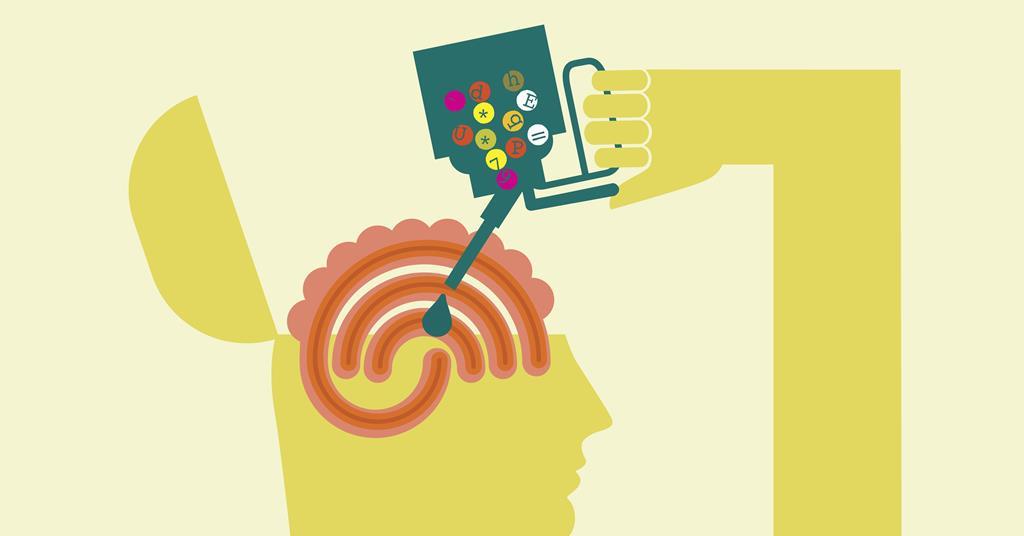
Don’t let resistance to change stop students from changing the world

Greening Chemistry is a series of opinion columns, written by a rotating group of contributors.
New experiences, opportunities, and challenges can change our perspectives and introduce new ways to see concepts and issues that we thought we already understood—or that we had no idea existed. And it’s clear that science, especially chemistry, can help explain, influence, and improve the lives of so many individuals and species around the world.
Nevertheless, as a discipline we can be very resistant to combining these three concepts—chemistry, education, and life—and applying them together to conserve life and promote a better, more sustainable, and healthier future for our generation and the ones to come. The experience of learning offers the chance to understand more about something that’s familiar and the opportunity to encounter new information to change your perspective. That’s why I wonder why the majority of chemistry students are currently being taught the same things that their mentors were, in the same way. Clearly, the world is not the same as it was 30–40 years ago. Shouldn’t we prioritize equipping the future workforce with the knowledge and skills to design cost-effective, high-performance, and less harmful processes and products, especially since there is a growing interest in green and sustainable chemistry among students?
Plenty of studies, reports, and surveys support the idea that current students in science, technology, engineering, and mathematics understand their unique responsibility in making the world a better place. Students want to invent real-world solutions that could tackle the environmental and societal problems of today and those that are likely to emerge tomorrow. Industry has been supporting green chemistry education, pushing for greener materials and processes, encouraging carbon-neutral goals and initiatives, and setting up new and bolder sustainability targets and commitments. Scientific societies around the world have been stepping in to catalyze a change in chemistry education, and the inclusion of the 12 principles of green chemistry in the curriculum is now a critical requirement for chemistry programs that want to obtain or maintain their American Chemical Society approval.
But individual, collective, and systemic resistance to change add up to one of the most problematic barriers to the inclusion of green chemistry in education. The most valuable learning experiences often require a shift in mindset, stepping out of our comfort zones, which may sound cliché. But changing anything that has been done constantly, specifically, and consistently is challenging. So why not inspire the community to approach science through the lens of green and sustainable chemistry rather than urge people to take on the entire world with limited expertise and resources (including time)? Why can’t we celebrate small actions, support each other to make the impacts of those actions grow, and walk together on the same journey?
When I first learned about the green chemistry field, it was incredibly exciting to suddenly have 12 actionable ways to create a positive impact on human health and the environment. This inspired me to seek out even more ways to promote a sustainable future. Change rarely happens all at once, and incremental changes are progress toward the common direction and should be celebrated, especially when they’re related to the impact of educators in the lives of bright, energetic, and passionate future scientists. Efforts that start small can grow quickly and impressively. More importantly, bringing sustainability concepts into the chemistry curriculum could look very different as efforts emerge across many locations, cultures, and institutions worldwide.
The best way for these kinds of efforts to begin is with a shift in perspective, a willingness to look at the familiar in a new way. To me, the inclusion of green chemistry in the curriculum can promote the connection between life, education, and science in a meaningful way. And it serves the pursuit of sustainability. Whether they start with a single lesson, a small research project, or a conversation that sparks curiosity, these actions matter and remind us that the future of chemistry and the health of our planet are shaped not only by great discoveries but by the quiet courage to take the first step.
Juliana Vidal Credit:
Courtesy of Juliana Vidal

Juliana Vidal is a senior program manager at Beyond Benign, a nonprofit organization dedicated to empowering the community for a sustainable future through green chemistry. At Beyond Benign, Vidal works on the Higher Education team to support the incorporation of green chemistry in higher education institutions through the Green Chemistry Commitment program.
Views expressed are those of the author and not necessarily those of C&EN or the American Chemical Society.
Chemical & Engineering News
ISSN 0009-2347
Copyright ©
2025 American Chemical Society
link



.jpg "IFW Dresden selects Agnitron Agilis 100 MOCVD platform for precursor chemistry and ultra-wide-bandgap materials development")
