


A breakthrough experiment, published in the Proceedings of the National Academy of Sciences, offers compelling support for the RNA world hypothesis, one of the leading theories on how life began on Earth.
The RNA World Hypothesis: A Cosmic Shortcut to Life?
The origin of life on Earth remains one of the most persistent scientific mysteries. Among the competing theories, the RNA world hypothesis holds a special place. It proposes that life began with ribonucleic acid (RNA), a molecule capable of storing genetic information and catalyzing chemical reactions, before the emergence of DNA or proteins. Yet one of the central challenges has always been understanding how such complex molecules could have formed spontaneously in the harsh conditions of the early Earth.
Now, a team of biochemists led by Yuta Hirakawa of Tohoku University in Japan, in collaboration with the Foundation for Applied Molecular Evolution in Florida, may have found a critical piece of the puzzle. Their new experiments reveal that under specific geological conditions including the presence of borates and basalt the core building blocks of RNA can assemble naturally, without human intervention. Their findings, published on December 15 in the Proceedings of the National Academy of Sciences, lend fresh weight to the idea that life’s molecular ingredients could have formed relatively easily, geologically speaking.
This insight suggests that Earth’s unique combination of chemistry, heat, and impact history might have created a natural shortcut for the emergence of biology. It also opens intriguing possibilities for other planets such as Mars where similar conditions may have existed.

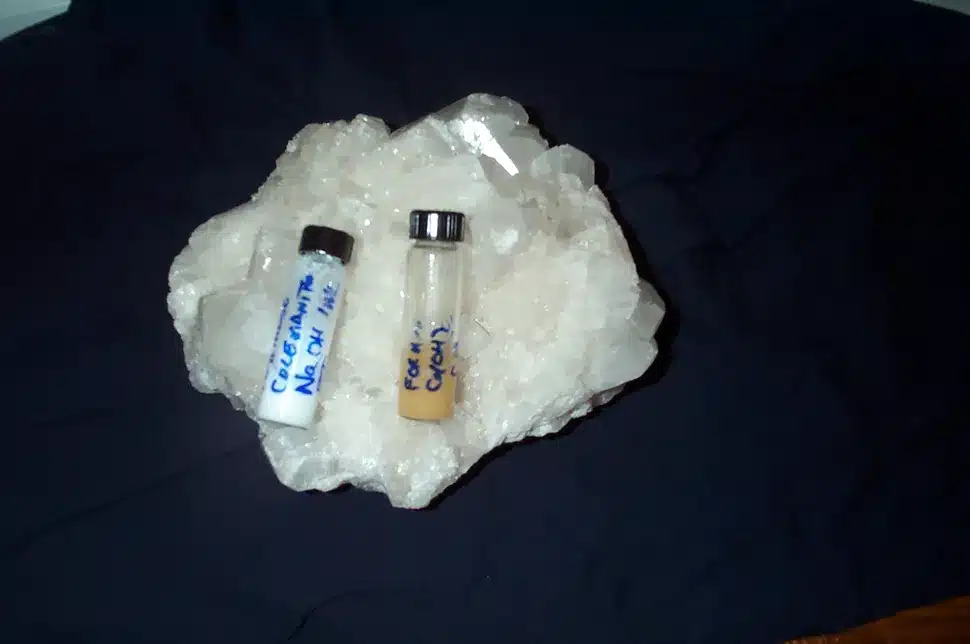
How The Experiment Worked: Simulating Early Earth Conditions
The experiment was deceptively simple, yet potentially revolutionary. Hirakawa’s team combined the basic ingredients of RNA: ribose (a five-carbon sugar), phosphates, and the four fundamental nucleobases adenine, guanine, cytosine, and uracil. These components were placed in a mixture that included borates (naturally occurring compounds found in seawater) and basalt, a common volcanic rock.
The mixture was then subjected to heating and drying cycles, simulating the kind of wet-dry transitions that would have occurred near geothermal or underground aquifers on early Earth. Surprisingly, not only did the borates not inhibit RNA formation, as was previously believed, they actually facilitated key steps in the chemical synthesis. For example, borates helped stabilize ribose, which is typically fragile and prone to degradation. They also aided in the integration of phosphates, a vital process for forming RNA’s backbone structure.
The presence of basalt, acting as a natural catalyst, created a mineral-rich environment similar to what scientists believe existed 4.3 billion years ago, during a phase when Earth was still bombarded by asteroid-sized planetary remnants. These findings suggest that no sophisticated lab conditions or directed synthesis were needed, just the right ingredients, at the right time, in the right geological setting.


Why The Discovery Matters: From Earth to Asteroids and Mars
This experiment not only strengthens the RNA world hypothesis but also points to a more universal scenario for the origin of life. The detection of ribose in asteroid material, specifically from the NASA OSIRIS-REx mission that returned samples from asteroid Bennu, provides further support. The same building blocks of RNA that were assembled in Hirakawa’s lab were also found in extraterrestrial matter, indicating that these molecules could be cosmic in origin, not Earth-specific.
According to the study, a massive impact event involving a 500-kilometer-wide protoplanet, potentially rich in these molecules, could have delivered the necessary ingredients in a single, cataclysmic event. This impact, estimated to have occurred around 4.3 billion years ago, might have provided both the materials and the energy needed to trigger RNA synthesis on Earth.
Interestingly, similar impact events occurred on Mars, and borates have also been detected there. This opens the possibility that RNA, or its precursors, may have formed on other terrestrial planets, raising compelling questions about the potential universality of life in the cosmos.
The Debate Continues: Are We Witnessing a Natural Genesis or Laboratory Artifact?
Despite the enthusiasm surrounding the study, not all researchers are ready to declare victory. Some critics argue that even though the experiments were designed to mimic natural conditions, placing all the ingredients into a test tube is itself a form of human intervention. This criticism touches on a long-standing debate in abiogenesis research at what point does experimental design stop representing nature and start becoming artificial?
Still, supporters counter that this new method marks a significant leap from previous experiments, where enzymes or specific catalysts were artificially introduced to induce reactions. Here, the system was allowed to proceed under naturalistic conditions, making it one of the most realistic prebiotic simulations to date.
By grounding the experiment in both planetary geology and astrochemistry, the research expands the conversation beyond Earth. If borates, ribose, and nucleobases exist on asteroids and Mars, and if their synthesis doesn’t require complex conditions, then the ingredients for life might be a byproduct of planetary formation itself.
link