



Atinary this week announced the launch of its new AI-powered laboratory in Boston, MA. The new lab will enable faster, more reliable discovery across chemistry, materials and pharmaceutical R&D. By moving beyond software into the physical execution of science, the facility is designed to catalyze faster, more reliable breakthroughs in chemistry, materials science and pharmaceuticals.


Scientific Discovery Factories
The facility houses two autonomous platforms called Atinary’s Scientific Discovery Factories, which continuously design, execute, analyze and learn from real-world experiments with minimal human intervention. The factories run experiments in closed-loop Design-Make-Test-Analyze-Learn (DMTAL) cycles, with outcomes automatically feeding back into Atinary’s machine-learning algorithms and foundation model to determine the next best experiments.
Much of experimental science still relies on slow, manual and expensive trial-and-error. Atinary addresses this bottleneck by combining human scientific judgment with machine-speed screening, execution and learning. This AI-native, closed-loop R&D infrastructure enables higher reproducibility and data quality, faster convergence on optimal chemistry and processes and more efficient use of experimental resources.

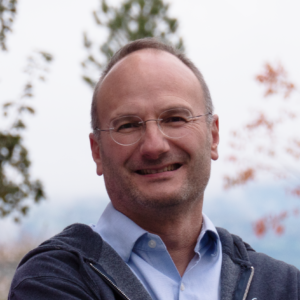
Hermann Tribukait. Credit: Atinary
“Self-driving labs are about bringing AI into contact with reality,” said Hermann Tribukait, co-founder and CEO of Atinary. “By closing the loop between experiment design, physical execution and learning, we enable science to progress at a fundamentally different pace. In our Boston lab, human insight and machine intelligence will work together to unlock discoveries that would otherwise take decades.”
Atinary’s multidisciplinary team and Scientific Advisory Board guided this work. The team spans chemistry, AI, supercomputing and lab automation, including MIT Professor Stephen Buchwald, the most cited chemist in the world for 10 years. Together with its partners, the team advances a model where AI does not replace scientists but amplifies their imagination, creativity, and decision-making.
The Boston lab will initially focus on small-molecule synthesis and catalysis, supporting pharmaceutical R&D from early discovery through process development, with a platform designed to scale across chemical and materials sciences.
link